Forget what they told you about cleaning; real results demand precision. In the world of soft washing, getting that perfect, tenacious "cling" isn't magic—it's a science, and mastering it is the key to conquering grime. At Rinse Rebels, we know that understanding the science behind your mix ratios is what separates the pretenders from the pros. This isn't just about throwing chemicals at a problem; it's about strategic application for maximum impact.
The Unsung Hero: Understanding Cling and Dwell Time
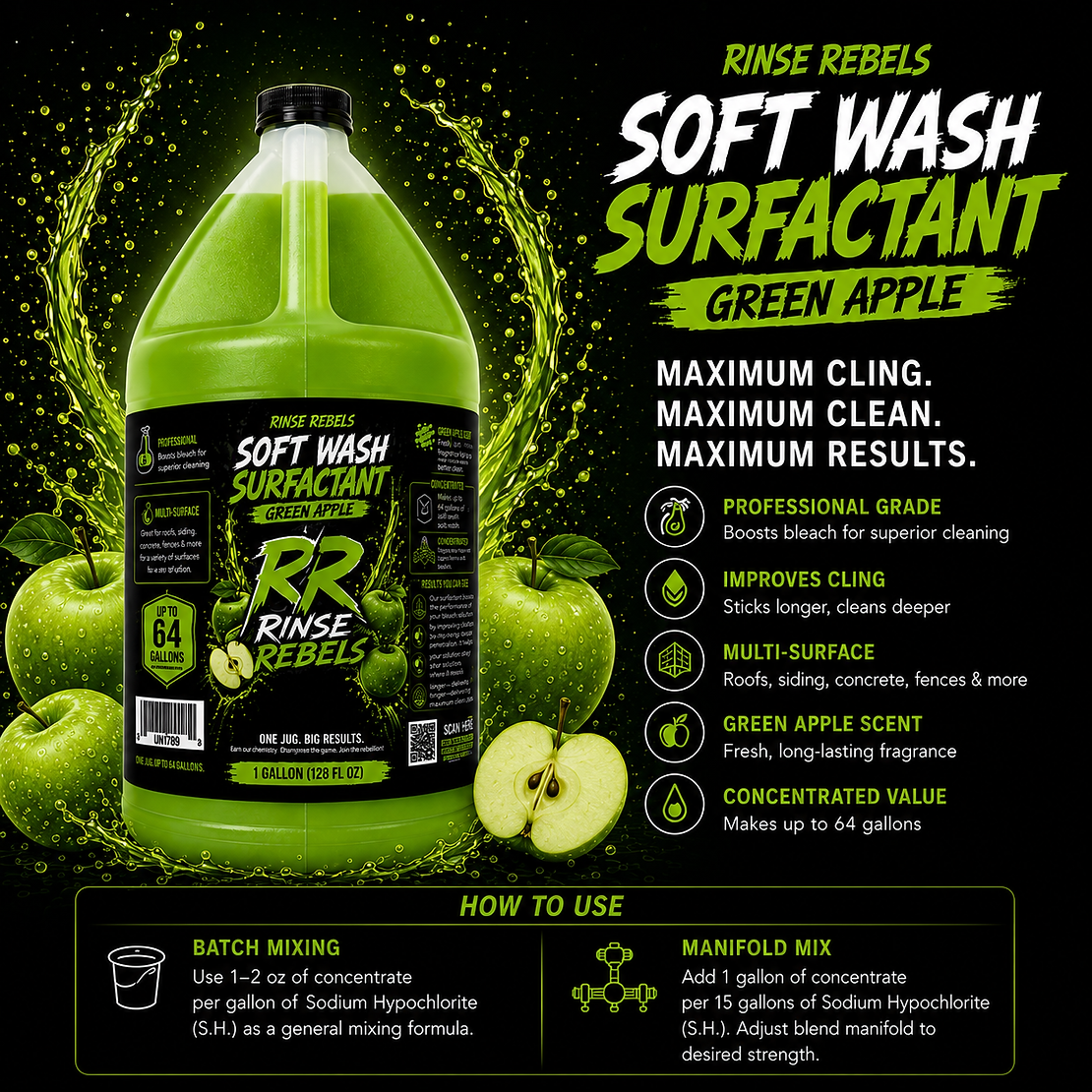
Many think soft washing is just spraying on a cleaner and rinsing it off. But the real power lies in "cling"—how long your solution sticks to the surface. It's not about making a thick foam, it's about keeping the active ingredients in contact with the organic growth or stain. This extended contact, known as dwell time, allows the powerful agents in your solution to break down grime, algae, mold, and mildew effectively. Without proper cling, your solution runs off too quickly, wasting product and leaving you with subpar results. The secret weapon here often involves the best soft wash surfactants, which are specifically formulated to enhance this crucial stickiness, ensuring your solution works harder for you.
Crafting the Perfect Ratio: More Than Just Mixing
Achieving the ideal soft wash ratio is more than a casual guess; it's a calculated decision based on the type of surface, the severity of the contamination, and even environmental factors like temperature. An inadequate ratio means your solution might be too weak to tackle the problem, forcing multiple applications or, worse, leaving remnants of grime. On the flip side, an overly strong mix is wasteful, can potentially damage delicate surfaces, and isn't necessary for most jobs. This is where real-world experience comes into play. Professionals understand that a roof covered in heavy lichen demands a different concentration than lightly soiled vinyl siding. Your choice of professional exterior cleaning products, along with careful calibration, dictates your success.
Field-Tested Formulas and Rebel Ratios
There are no one-size-fits-all answers in the field, but there are proven starting points. For general house washing on vinyl or painted surfaces, a lighter mix might suffice, typically around a 0.75-1.5% sodium hypochlorite (SH) concentration, enhanced with a quality surfactant. For tougher jobs like shingle roofs with significant algae and moss, you might escalate to a 3-5% SH solution. Concrete driveways or commercial grade cleaning solutions for heavy industrial grime may require even higher concentrations or specialized degreasers and rust removers. The key is to start conservatively and increase strength only if necessary, always performing a small test patch first. Remember, knowing your equipment and flow rates, often part of professional pressure washing supplies, is crucial for accurate mixing.
Join the Rebellion Against Grime
So, ditch the guesswork and embrace the rebel within that demands perfection. Understanding the science of cling and perfecting your soft wash ratios isn't just about cleaning; it's about reclaiming surfaces and leaving a lasting impression. For those ready to elevate their craft, exploring the nuances of our professional exterior cleaning products can provide the edge you need. Join the rebellion for professional-grade results at Rinse Rebels, where we redefine clean. If you're looking to buy soft wash chemicals that deliver on their promises, we encourage you to explore our comprehensive product descriptions to find the right solution for your next challenging project.